
Tenders: Learning from Failure and Turning Losses into Wins
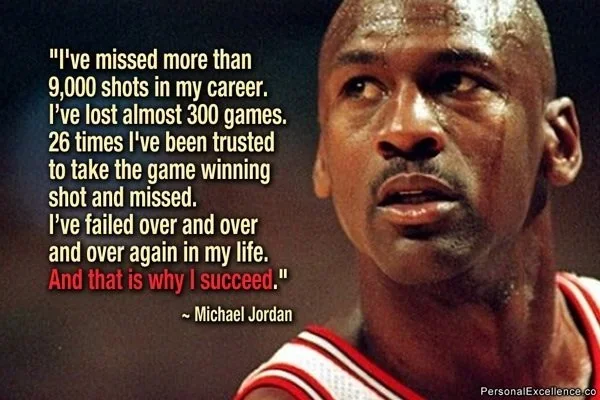
Basketball icon Michael Jordan famously said:
“I’ve missed more than 9,000 shots in my career. I’ve lost almost 300 games. Twenty-six times, I’ve been trusted to take the game-winning shot and missed. I’ve failed over and over and over again in my life. And that is why I succeed.”
Jordan’s greatness wasn’t built on perfection — it was built on loss. Missed shots. Lost games. Failed moments under pressure. And that’s exactly why he won.
Tendering is no different. You can prepare relentlessly, analyse obsessively, assemble the perfect team and submit an exceptional bid — and still walk away empty-handed. Like Wimbledon, where 128 world-class tennis players start but only one lifts the trophy, most contenders fall short. In elite sport and in tenders, victory only goes to one so it’s a ruthless business. The real edge lies in how you respond when you don’t win — because mastery isn’t forged in success, it’s forged in failure.
Control the Controllables
It’s vital to be honest about why we lose and to distinguish between the reasons we tell ourselves and the reality. “We lost on price” is rarely the full story. “They had a preferred supplier” might occasionally be true, but it’s not a catch-all explanation. More often than not, there were elements within our control that we could have executed better — clearer value articulation, sharper differentiation, stronger alignment to the brief. Rather than defaulting to excuses, we should take a lesson from professional sport: control the controllables. That mindset shifts the focus from external factors to continuous improvement — and that’s where real progress is made.
The most common reasons tender bids fail
Tender bids most commonly fail for reasons that are both predictable and preventable. Price can be a factor — either genuinely too high or trapped in a race to the bottom with little differentiation. Compliance gaps can quietly undermine an otherwise strong submission, while a weak or poorly articulated value proposition leaves evaluators unconvinced. Often, bids reveal a shallow understanding of the client’s real needs, relying instead on generic, recycled responses — increasingly obvious in the age of AI-generated content! Without clear, compelling win themes that set the submission apart, even a capable organisation can blend into the crowd.
Post-Tender Reviews That Actually Work - Turn losses into actionable insights
Most post-mortems fail because they are driven by emotion rather than evidence. They’re either too defensive or too superficial, with plenty of discussion but little ownership and even less follow-through. A far more effective approach is structured and forensic: challenge the assumptions you made, identify where your claims lacked evidence, examine the feedback you received — and note what you didn’t receive — and decide clearly what you would keep, kill or change next time. Over time, comparing multiple bids reveals repeat patterns: the same sections scoring poorly, recurring pricing issues, familiar capability gaps. That’s when the conversation becomes more strategic. Are the losses rooted in external factors or internal weaknesses? Is this fundamentally a strategy issue or a writing issue? And just as importantly, should you bid again at all? Even when feedback is limited, disciplined reflection allows you to extract value — turning every loss into usable intelligence rather than a missed opportunity.
Turning Failure into Better Wins
The only real mistake is the one from which we learn nothing.
Turning failure into better wins is about turning every loss into a learning opportunity. What could we have done differently to win next time? The real value of a setback lies in how deliberately its lessons are fed into the next opportunity:
· Sharpening bid/no-bid decisions
· Strengthening solution design
· Refining win themes
· Reviewing pricing strategy.
Over time, this discipline builds a powerful “learning tender library” — a living source of insight rather than a graveyard of old submissions. Just like in elite sports, it’s rarely a radical overhaul that changes outcomes, but a one-degree shift: small, incremental gains and intelligent adjustments that create lasting impact. Above all, it requires a cultural shift — moving from blame to learning, from easy excuses to accountability — so that each failure becomes a stepping stone to a stronger, smarter win.
As Thomas Edison put it:
“I have not failed. I've just found 10,000 ways that won't work”
Quick Mental Map of Procurement Terms